
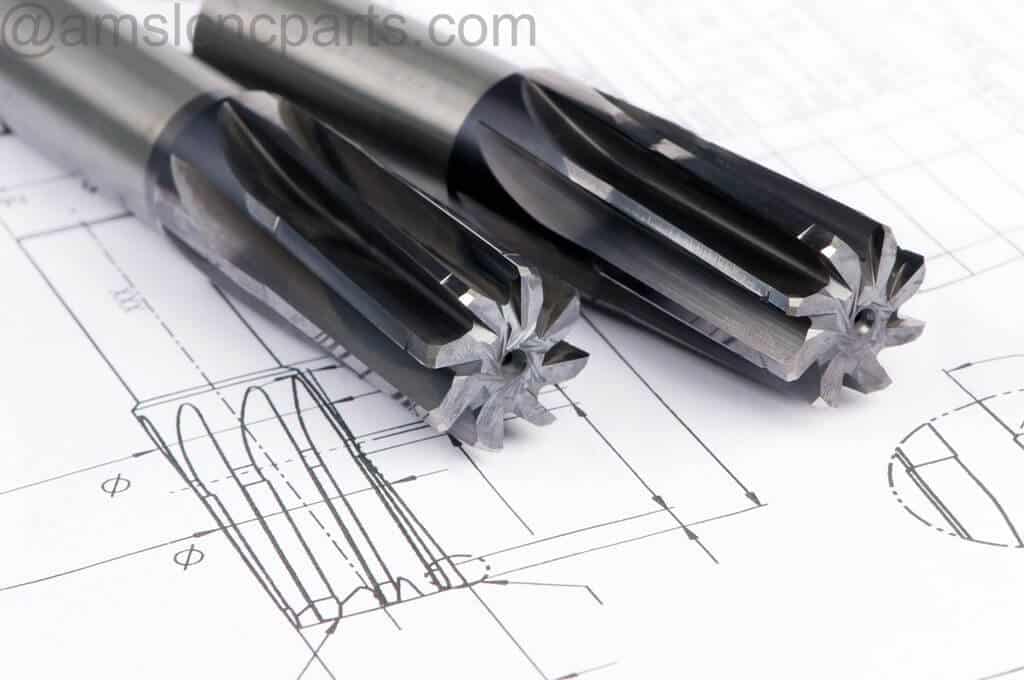
Definition for a reamer tool
Reamer (Volume Name: Mechanical Engineering): A rotary finishing tool with straight or spiral cutting edges for reaming or smooth holes.
This process, known as reaming, involves semi-precision machining to refine small to medium-diameter holes. It is often employed as a preparatory step before further machining processes, such as grinding or drilling, or as a final step to achieve precise dimensional tolerances.
What are the types of reamers? And when should you use them?
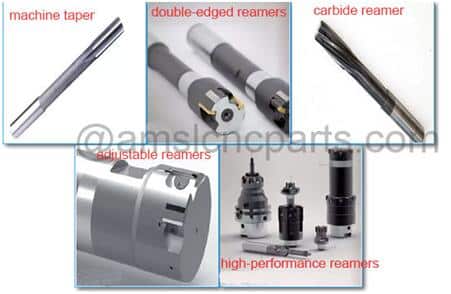
Reamers can machine cylindrical, tapered, through and blind holes. They are precision tools used in machining to enlarge and smooth holes in various materials. Here are 5 types of reamers; they are categorized based on their design, material, and application:
Way to use
Hand Reamer Tool: Typically use 9SiCr material
Machine Reamer Tool: Made from high-speed steel (HSS)
Based on Material
High-speed steel (HSS): HSS is a popular material for reamers, drills and other cutting tools due to its durability and excellent hardness, wear and heat resistance
Carbide insert: Efficient for high-speed machining of hard materials like cast iron, stainless steel, and high-temperature alloys.
Shank design
Straight shank reamer: Feature a straight shank used for drilling and machine tools
Taper shank reamer: Designed with a tapered shank for tapered holes and machine tools
Set reamer: Come in sets of various sizes for versatility, adjusting in hole diameters.
Based on Adjustability
Adjustable reamer: Allow for hole sizes to vary with adjustable blades.
Non-adjustable reamer: Have fixed blade sizes for consistent hole dimensions.
Welded reamer: Using welding blades onto a shank for specific applications.
Convertible reamer: Adapt to different hole sizes with interchangeable parts.
Assembly reamer: For precision hole alignment in assembly processes.
Hole shape
Taper hole reamer: Used to refine tapering holes precisely, typically for engineering and metalworking use. (standard taper reamers have a 1:50 taper pin cutter and morse taper reamer two types).
Cylindrical hole reamer: Used for cylindrical holes.
Step hole reamer: Tailored to enlarge and refine stepped holes
By Construction Form
Solid and Shell Reamers: Solid reamers are one-piece tools, while shell reamers consist of removable cutting heads mounted on a shank.
Tooth Shape:
Straight-Tooth: With straight teeth.
Spiral-Tooth Reamers: Reamers with helical cutting teeth.
Download HSS and Carbide Reamers Tolerance Table Sheet as Following:
HSS and Carbide Reamers Tolerance Table Sheet.xlsx
| Reamer Diameter Tolerances for Carbide Reamers (mm) | ||||
|---|---|---|---|---|
| Reamer Diameter | Limit deviation of diameter | H7 Class of Accuracy | H8 Class of Accuracy | H9 Class of Accuracy |
| >5.3~6.0 | +0.012 | +0.007 | +0.001 | +0.019 |
| +0.018 | +0.03 | |||
| >6.0~10.0 | +0.015 | +0.009 | +0.014 | +0.023 |
| +0.022 | +0.036 | |||
| >10.0~18.0 | +0.018 | +0.011 | +0.017 | +0.027 |
| +0.027 | +0.043 | |||
| >18.0~30.0 | +0.021 | +0.013 | +0.021 | +0.033 |
| +0.033 | +0.052 | |||
| >30.0~40.0 | +0.025 | +0.016 | +0.025 | 0.040 |
| +0.039 | +0.062 | |||
| Reamer Diameter Tolerance for (HSS) High-speed Reamers (mm) | ||||
| Reamer Diameter | Limit deviation of diameter | H7 Class of Accuracy | H8 Class of Accuracy | H9 Class of Accuracy |
| >5.3~6.0 | +0.010 | +0.005 | +0.008 | +0.014 |
| +0.015 | +0.025 | |||
| >6.0~10.0 | +0.012 | +0.006 | +0.01 | +0.017 |
| +0.018 | +0.03 | |||
| >10.0~18.0 | +0.015 | +0.008 | +0.012 | +0.020 |
| +0.022 | +0.036 | |||
| >18.0~30.0 | +0.017 | +0.009 | +0.016 | +0.025 |
| +0.028 | +0.044 | |||
| >30.0~50.0 | +0.021 | +0.012 | +0.019 | +0.03 |
| +0.033 | +0.052 | |||
| >50.0~80.0 | +0.025 | +0.014 | +0.022 | +0.036 |
| +0.039 | +0.062 | |||
| >80.0~100.0 | +0.029 | +0.016 | +0.026 | +0.042 |
| +0.045 | +0.073 | |||
Download Reamers Cutting Parameters Table Sheet as Following:
Reamers Cutting Parameter.xlsx
| Selection of Reamer Cutting Amount | ||||||||||||||
|---|---|---|---|---|---|---|---|---|---|---|---|---|---|---|
| The cutting parameters for high-speed steel (HSS) reamers when processing different materials | ||||||||||||||
| Reamer diameter d 0/mm | Low-carbon steel 120~200 HBS | Low-alloy steel 200~300 HBS | High-alloy steel 300~400 HBS | Soft cast iron 130 HBS | Medium hard cast iron 175 HBS | Hard cast iron 230 HBS | ||||||||
| f | v | f | v | f | v | f | v | f | v | f | v | |||
| 6 | 0.13 | 23 | 0.1 | 18 | 0.1 | 7.5 | 0.15 | 30.5 | 0.15 | 26 | 0.15 | 21 | ||
| 9 | 0.18 | 23 | 0.18 | 18 | 0.15 | 7.5 | 0.2 | 30.5 | 0.2 | 26 | 0.2 | 21 | ||
| 12 | 0.2 | 27 | 0.2 | 21 | 0.18 | 9 | 0.25 | 36.5 | 0.25 | 29 | 0.25 | 24 | ||
| 15 | 0.25 | 27 | 0.25 | 21 | 0.2 | 9 | 0.3 | 36.5 | 0.3 | 29 | 0.3 | 24 | ||
| 19 | 0.3 | 27 | 0.3 | 21 | 0.25 | 9 | 0.38 | 36.5 | 0.38 | 29 | 0.36 | 24 | ||
| 22 | 0.33 | 27 | 0.33 | 21 | 0.25 | 9 | 0.43 | 36.5 | 0.43 | 29 | 0.41 | 24 | ||
| 25 | 0.51 | 27 | 0.38 | 21 | 0.3 | 9 | 0.51 | 36.5 | 0.51 | 29 | 0.41 | 24 | ||
| Reamer diameter d 0/mm | Malleable cast iron | Cast Brass & Bronze | Cast Aluminum and Zinc Alloy | Plastic | Stainless steel | Titanium alloy | ||||||||
| f | v | f | v | f | v | f | v | f | v | f | v | |||
| 6 | 0.1 | 17 | 0.13 | 46 | 0.15 | 43 | 0.13 | 21 | 0.05 | 7.5 | 0.15 | 9 | ||
| 9 | 0.18 | 20 | 0.18 | 46 | 0.2 | 43 | 0.18 | 21 | 0.1 | 7.5 | 0.2 | 9 | ||
| 12 | 0.2 | 20 | 0.23 | 52 | 0.25 | 49 | 0.2 | 24 | 0.15 | 9 | 0.25 | 12 | ||
| 15 | 0.25 | 20 | 0.3 | 52 | 0.3 | 49 | 0.25 | 24 | 0.2 | 9 | 0.25 | 12 | ||
| 19 | 0.3 | 20 | 0.41 | 52 | 0.38 | 49 | 0.3 | 24 | 0.25 | 11 | 0.3 | 12 | ||
| 22 | 0.33 | 20 | 0.43 | 52 | 0.43 | 49 | 0.33 | 24 | 0.3 | 12 | 0.38 | 18 | ||
| 25 | 0.38 | 20 | 0.51 | 52 | 0.51 | 49 | 0.51 | 24 | 0.36 | 14 | 0.51 | 18 | ||
| The cutting parameters for carbide reamer reaming holes | ||||||||||||||
| Machining Material | Reamer diameter d 0/mm | Cutting depth α p/mm | Feed rate f/(mm/r) | Cutting speed V/(m/min) | ||||||||||
| Steel | σ b MP a | ≤1000 | <10 | 0.08~0.12 | 0.15~0.25 | 6~12 | ||||||||
| 10~20 | 0.12~0.15 | 0.20~0.35 | ||||||||||||
| 20~40 | 0.15~0.20 | 0.30~0.50 | ||||||||||||
| > 1000 | <10 | 0.08~0.12 | 0.15~0.25 | 4~10 | ||||||||||
| 10~20 | 0.12~0.15 | 0.20~0.35 | ||||||||||||
| 20~40 | 0.15~0.20 | 0.30~0.50 | ||||||||||||
| Cast steel σ b ≤700MP a | <10 | 0.08~0.12 | 0.15~0. 25 | 6~10 | ||||||||||
| 10~20 | 0.12~0.15 | 0.20~0.35 | ||||||||||||
| 20~40 | 0.15~0.20 | 0.30~0.50 | ||||||||||||
| Machining Material | Reamer diameter d 0/mm | Cutting depth α p/mm | Feed rate f/(mm/r) | Cutting speed V/(m/min) | ||||||||||
| Gray cast iron HBS | ≤200 | <10 | 0.08~0.12 | 0.15~0. 25 | 8~15 | |||||||||
| 10~20 | 0.12~0.15 | 0.20~0.35 | ||||||||||||
| ≤200 | 20~40 | 0.15~0.20 | 0.30~0.50 | 8~15 | ||||||||||
| Gray cast iron HBS | >200 | <10 | 0.08~0.12 | 0.15~0. 25 | 5~10 | |||||||||
| 10~20 | 0.12~0.15 | 0.20~0.35 | ||||||||||||
| 20~40 | 0.15~0.20 | 0.30~0.50 | ||||||||||||
| Cold cast iron HBS65~80 | <10 | 0.08~0.12 | 0.15~0. 25 | 3~5 | ||||||||||
| 10~20 | 0.12~0.15 | 0.20~0.35 | ||||||||||||
| 20~40 | 0.15~0.20 | 0.30~0.50 | ||||||||||||