How to Optimize Tool and Dies Manufacturing Process
AMSL optimizes the tool and die manufacturing processes to improve efficiency, cut costs, and maintain high-quality standards. This blog below explores effective strategies to streamline these critical processes and get high-precision parts.
Tool and die manufacturing employs machine tools and techniques precisely to produce specialized tools and molds for mass production ( Source: Wikipedia 「Tool and die manufacturing」. These tools are essential for cutting, shaping, or forming materials into finished parts, especially for high-precision injection molds. To learn more about the core machining processes that power tool and die manufacturing, explore our comprehensive guide: Machining Definition: 14 Key Processes and Tools Explained
What is the difference between tool and die manufacturing?
What sets apart a tool from a die? In manufacturing, both terms are usually used interchangeably; slight differences exist.
Tools encompass various mechanical devices for cutting, forming, supporting, or molding metals like injection mold. This definition includes multiple implements such as jigs, fixtures, drills, and cutting blades.
However, dies are a subset of tools specifically designed to change the shape of materials through cutting or forming processes. Typically, dies refer to the female and male components in shaping materials, such as punches, stamping, forging, or extrusion. They are custom-designed to produce specific shapes or profiles required in various products.
Industries rely on tools, and die—most commonly injection molds for plastic parts and die-casting dies for metal components—to deliver cost-effective production while maintaining strict high-quality standards
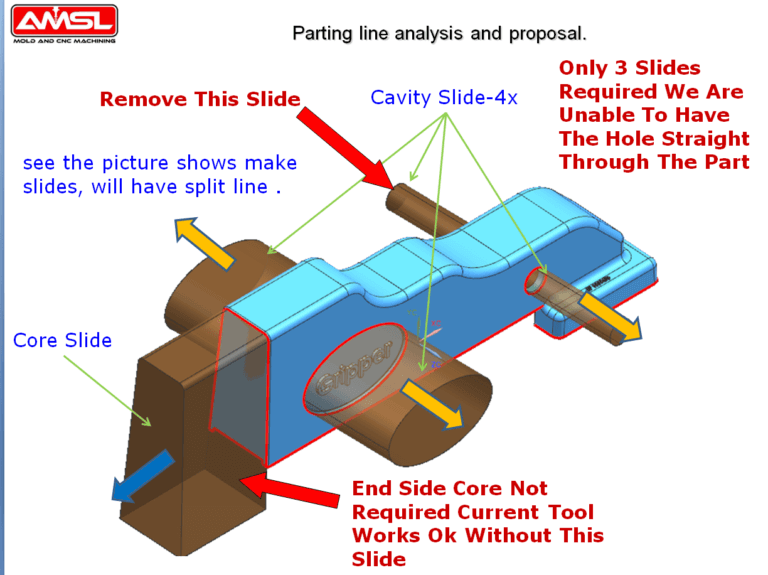
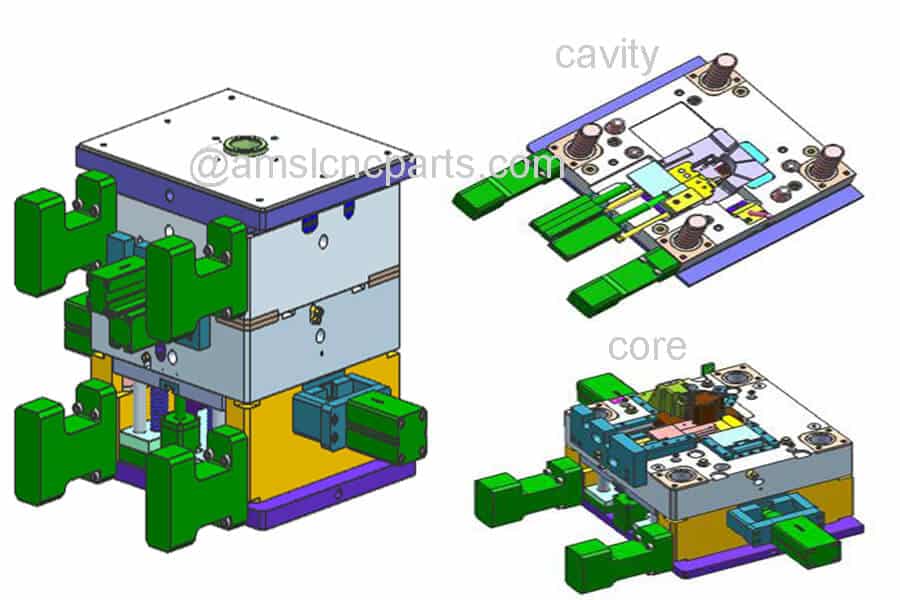
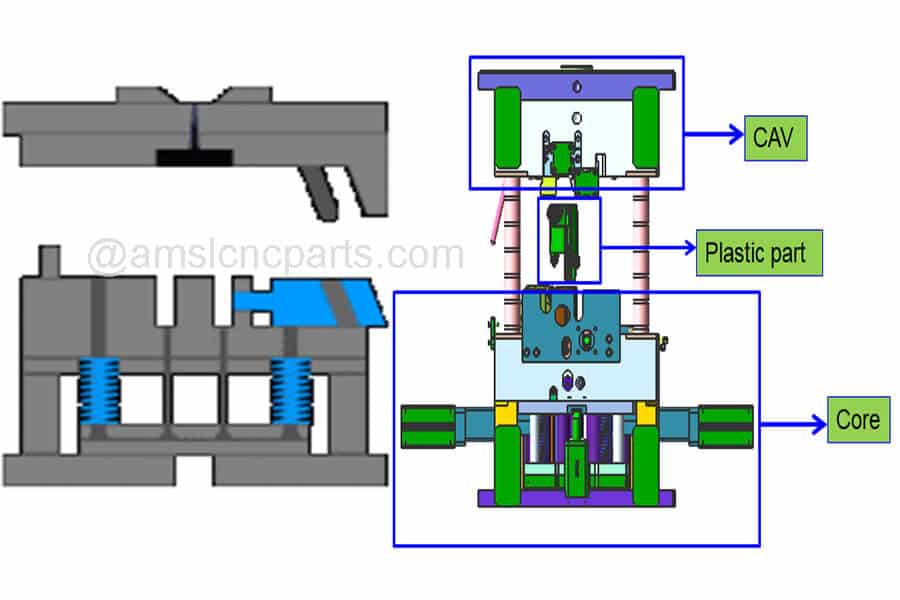
As shown in the diagram above, optimizing the injection mold structure—such as streamlining the parting line and reducing unnecessary slides—is critical for efficient production, as precision design is the foundation of high-quality tool and die manufacturing (per Britannica’s guide to injection molding).
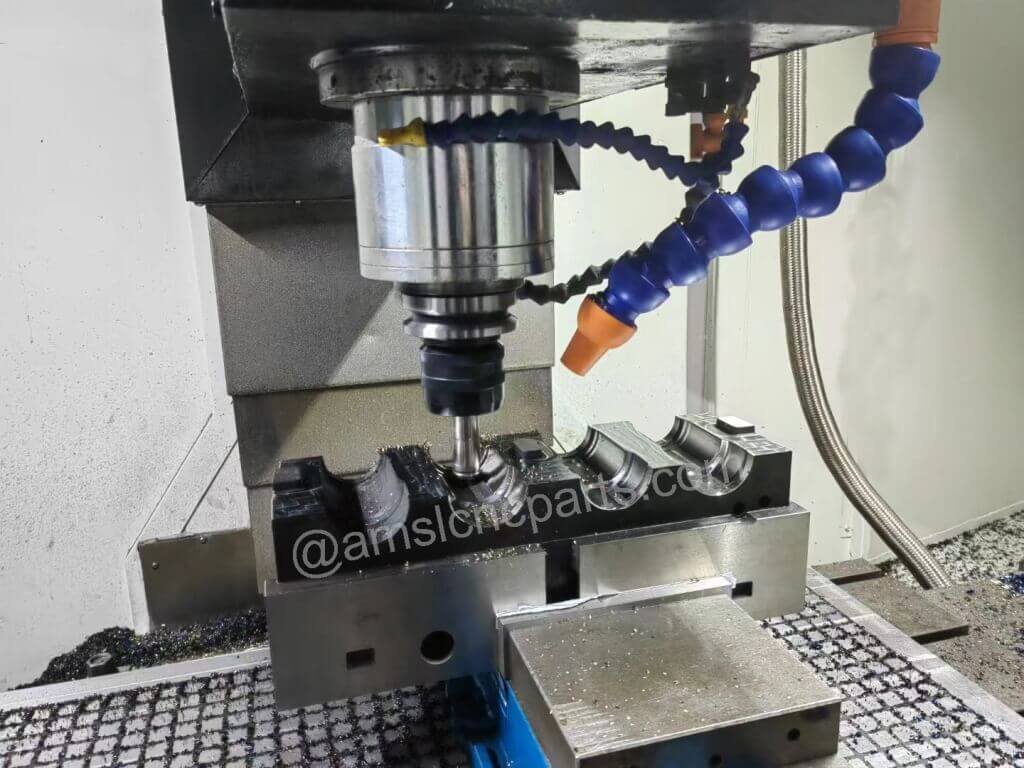
Most high-performance injection molds are made from hardened steel, which requires precision CNC machining to achieve the tight tolerances needed for complex geometries like this gripper part. Learn more about CNC machining steel for injection mold applications.
Case Studies Sharing
Lessons Learned From FOT
FOT Problems and Solutions in Tool and Die Manufacturing
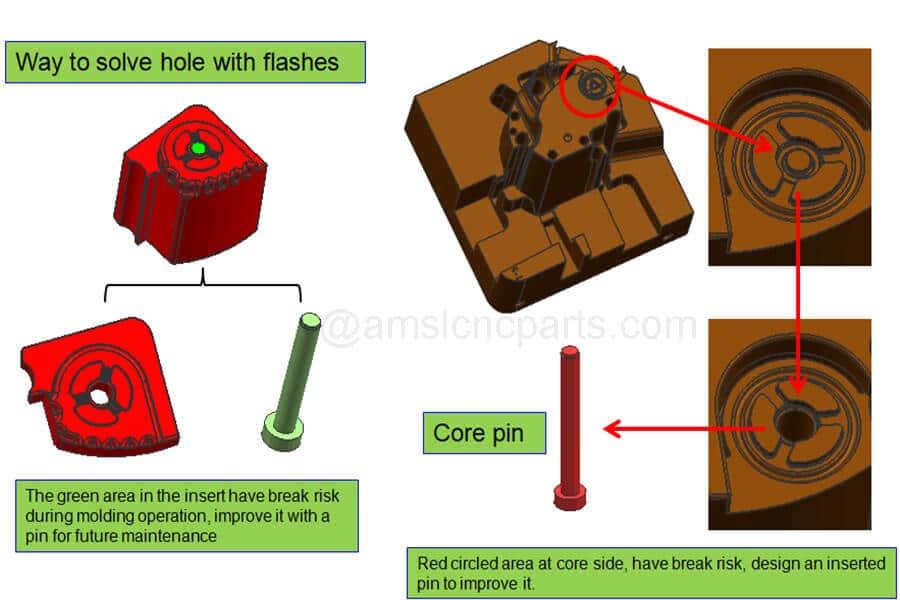
Holes with flash, ways to solve:
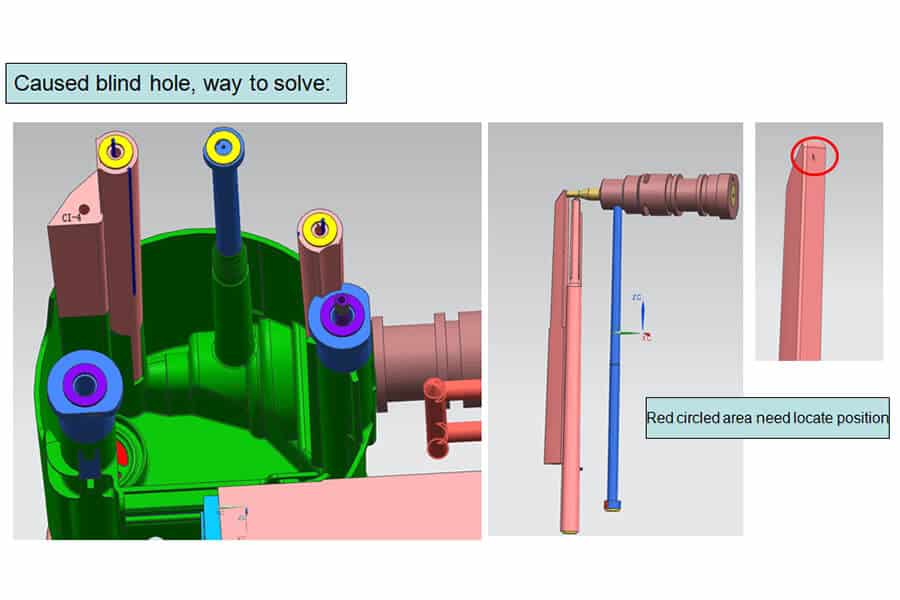
A broken pin caused a blinded hole, see the figure below: