Machining Definition: 14 Key Processes and Tools Explained

First and foremost, you’ve probably heard the term “machining” more times than you can count. But if someone stopped you in the hallway and asked, “Hey, what is machining, really?” could you give them a clear, to-the-point answer? Could you list some of the essential sub-processes of manufacturing?

To start with, don’t worry, whether you are based in Europe, The U.S or anywhere in the world, this guide will walk you through not just the machining definition but also 14 sub-processes that you should know.

Machining Definition: The Basics

Essential Machining Tools & Their Applications)

Machining is the process of precisely removing material using tools or machines to shape raw material into finished parts.  Additionally, it is a core form of subtractive manufacturing, which stands in contrast to additive methods like 3D printing. It includes two primary methods:

  1. Manual Machining

    • Operators use equipment like lathes, drills, and saws by hand, relying on skill and experience.

    • Best for small batches or simple parts where human precision is sufficient.

  2. CNC Machining

    • Computer-controlled tools (e.g., CNC mills, lathes, EDM, grinding) automate cuts for complex, high-volume production.

    • For this reason, it delivers consistent precision for industries like aerospace, medical device and automotive.

    • Typical CNC machining process steps include CAD design, G-code programming, machine setup, material cutting, and final quality inspection.

Precision-CNC-Machining-quality-inspection

precision-cnc-machining-Operator processing-CNC

Metal cutting tools for machining are engineered to efficiently remove material from metal workpieces, enabling the creation of precise, durable components. To illustrate, single-point cutting tools have a single cutting edge used to remove material in a linear motion from a workpiece, typically in the following operations:

✅ Turning        ✅Milling          ✅Boring
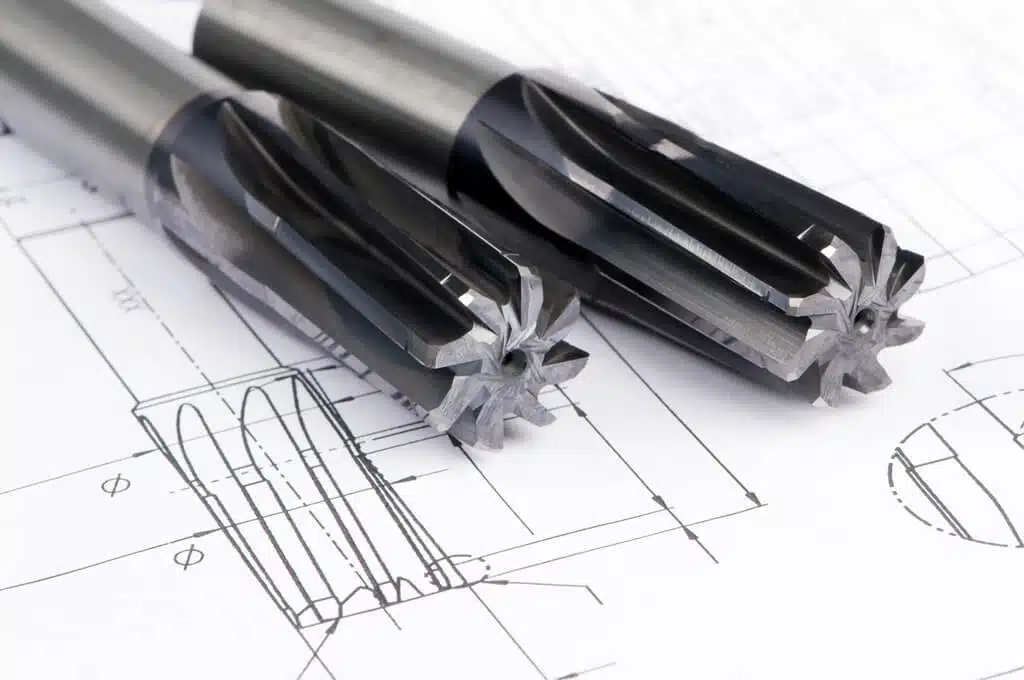
metal cutting tool

Drill

A cutting tool used to create cylindrical holes. It typically consists of a rotating cutting edge, called a drill bit, which is pressed against the material to remove chips and form the hole.

Used in material:

✅ wood  ✅ metal  ✅ plastic ✅ copper   ✅ aluminum  ✅ stainless steel ✅ glass  ✅ ceramics ✅ quartz

Machining operations:

✅drilling ✅reaming ✅boring


Reamer

A reamer is a cutting tool used to smooth, enlarge, or accurately shape an already-drilled hole in a workpiece.

Milling cutter

A rotary cutting tool used in milling machines or machining centers to perform milling operations. It consists of multiple cutting edges, called teeth, which remove material from the workpiece in order to produce the desired shape or profile.

Types of milling cutter:
1.End Mill: Ideal for cutting slots, profiling, and contouring, this tool is a versatile choice.

2. Face Mill: Primarily designed to face surfaces, typically on the end of the cutter.

3. Ball Nose Cutter: Excel in 3D profiling and finishing operations with its round tips.

4. Slab Mill: Optimized for removing large amounts of material quickly.

Used in material:
✅ high-speed steel  ✅ carbide  ✅ diamond

Applications:
✅ aerospace ✅ automotive ✅ mold making

Gear cutter

Used in gear manufacturing processes to create gears with specific tooth profiles and dimensions.

14 Machining Sub-Processes: A Complete Breakdown

Sub-Process Definition Applications
Turning Rotating workpiece cut by a lathe machine cylindrical parts such as shafts and sleeves.
Milling Rotary tools shape flat/3D surfaces complex shapes such as gear Aerospace components.
Drilling Creates holes with drills. Engine blocks, assemblies
Planning Linear tool motion for flat surfaces Large metal plates, flat surfaces or grooves
Boring Enlarges existing holes Pipes, hydraulic systems
Grinding Abrasive wheels for fine finishes Tool sharpening, optics
EDM Electrical discharges shape hard materials. Mold-making, medical devices.
Broaching Multi-tooth tools for unique shapes Keyways, splines. There are 2 main type: linear broaching and rotary broaching.
Laser Cutting High-energy beams for precise cuts. Sheet metal, electronics.
CNC Machining Automated, programmable precision. Complex prototypes
+4 More Gear shaping, thread cutting, Horning etc. Industry-specific uses.

Precision Machining Capabilities & Resources

Our CNC machining expertise extends to high-strength industrial components—explore our specialized CNC Machining Steel services for durable, precision parts.
For complex geometries and automated production, learn more about our core CNC Milling processes, and dive into the fundamentals of CNC technology with our guide: CNC: Meaning, Machines, and Manufacturing Applications.

Optimize your production workflows and tooling strategies with our expert insights:
How to Optimizing Tool and Die Manufacturing Process offers actionable tips for streamlining complex operations.
For turning operations, discover the right tools for the job with our guide: Lathe Cutting Tools: Types, Materials, and Selection.

Why Machining Sub-Processes Are Critical for Manufacturing

Furthermore, sub-processes like CNC milling or EDM let manufacturers outsource specialized tasks, ensuring quality while focusing on core operations. For example:

  • CNC excels in high-tolerance parts, making it indispensable for aerospace and medical industries.

  • Laser cutting speeds up sheet metal work,sheet metal work, enabling rapid prototyping and production runs.

  • In addition, combining multiple sub-processes (e.g., milling + grinding) allows for the creation of highly complex, finished components in a single workflow.

Subtractive vs Additive Manufacturing: Key Differences

Conversely, machining is a foundational example of subtractive manufacturing—material is removed from a solid block to create the final part. This stands in contrast to additive manufacturing (e.g., 3D printing), where material is layered to build up a part.
  • Subtractive (Machining): Ideal for high-strength metals, tight tolerances, and large parts.
  • On the other hand, additive (3D Printing) is better for complex geometries, low-volume production, and lightweight designs.
In other words, understanding this distinction helps engineers choose the right process for their project’s material, complexity, and volume requirements.
 
When we narrow this focus to ultra-tight tolerances, we arrive at the Precision machining definition refers to a specialized subset of machining that prioritizes ultra-tight tolerances (often ±0.001mm) for high-precision components used in aerospace and medical fields.
 

Conclusion: Mastering Machining Basics

 In summary, understanding the machining definition and its sub-processes helps you choose the right method for materials, complexity, and volume. Whether manual or CNC-driven, machining remains the backbone of precision manufacturing.

Need CNC machining services? Explore AMSL’s solutions for high-accuracy machining parts or Get a Free Quote for your tailored machining component

Scroll to Top