
Table of Contents
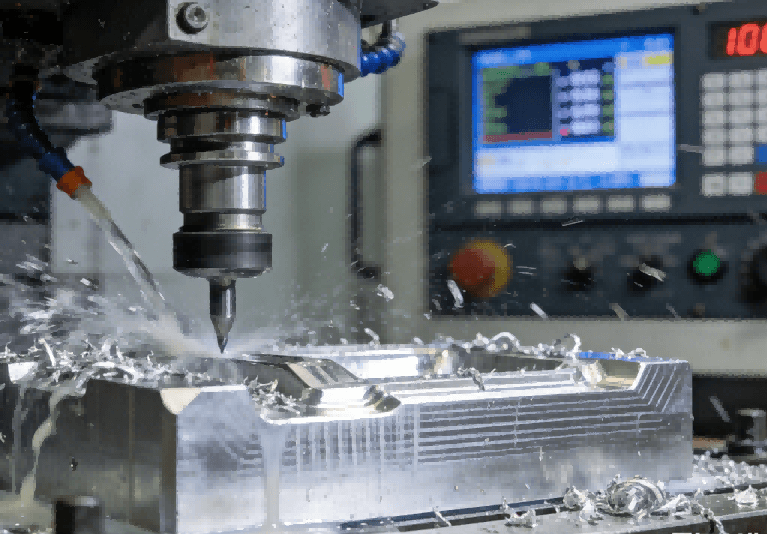
Choosing the right CNC machining materials is critical for producing durable, high-performance components across aerospace, medical, automotive, and industrial sectors. The material you select directly influences part strength, precision, cost, and lifespan. In this comprehensive guide, we break down the most widely used CNC machining materials, covering both CNC metals and CNC plastics, with detailed properties, industry standards, and real‑world applications.
Furthermore, all materials reviewed here comply with global ASTM and ISO standards, ensuring reliability and compatibility with precision CNC machining. Unlike generic resources, this guide combines industry data from SME and ASME with practical insights to help you choose the best material for your project.
Industry Standards & Data
All materials comply with ASTM/ISO standards, with data sourced from SME and ASME industry reports.
Common CNC Machining Metals: Properties & Industrial Applications
CNC metals are the foundation of heavy‑duty manufacturing due to their exceptional strength, thermal stability, and machinability. In this section, we examine the most popular CNC metals, their mechanical properties, and ideal use cases.
Steel Alloys (Carbon & Alloy Steel)
Steel is the most versatile category among CNC metals because it balances cost, strength, and machinability. According to industry data, steel accounts for over 70% of CNC‑machined structural components.
Carbon Steel (1018, 1045)
In terms of key properties (ASTM A1011/A1018), carbon steel offers high tensile strength, good machinability, and weldability. For instance, 1018 steel is ideal for high‑volume production, while 1045 steel supports heavy load‑bearing parts.
As a result, carbon steel is widely used for brackets, gears, hydraulic fittings, and machine components.
Alloy Steel (4140, 4340)
Alloy steel provides enhanced toughness compared to standard carbon steel. Specifically, 4140 steel offers excellent fatigue resistance, and 4340 steel performs under extreme stress.
Consequently, these alloys serve aerospace landing gear, automotive drivetrains, and high-performance tooling.
52100 Bearing Steel
52100 steel is a premium CNC machining material designed for high‑wear environments. With exceptional hardness and fatigue strength, it is the preferred choice for precision bearings, gears, and camshafts.
Aluminum Alloys (6061, 7075)
Aluminum is among the most lightweight yet strong CNC metals. In addition, it offers excellent corrosion resistance and thermal conductivity.
Specifically, 6061 aluminum CNC parts dominate aerospace frames, automotive parts, and electronics housings. Meanwhile, 7075 aluminum supports high‑stress structural applications.
Cast Iron & Ductile Iron
Because of superior vibration damping and rigidity, iron alloys are essential industrial CNC materials. For example, gray iron is widely used in engine blocks and machine bases.
Titanium Alloys & Titanium CNC Machining
Titanium delivers unmatched strength‑to‑weight performance. However, titanium CNC machining requires specialized tools and cooling systems.
Due to its biocompatibility and corrosion resistance, titanium is widely used in aerospace, medical implants, and marine equipment.
CNC Plastics: Properties & Industrial Applications
CNC plastics complement CNC metals by offering lightweight, low‑cost, and corrosion‑resistant solutions. Moreover, demand for CNC plastic components is growing 8% annually.
Acrylic (PMMA)
Acrylic provides excellent transparency and weather resistance. As such, it is widely used for optical parts, signage, and display components.
Polycarbonate (PC)
Polycarbonate stands out due to ultra‑high impact resistance. Therefore, it is ideal for safety equipment, medical housings, and automotive lenses.
Nylon (PA 6, 6/6, 12)
Nylon offers self‑lubricating properties and wear resistance. For this reason, it is widely used for gears, bearings, and sliding components.
PTFE (Teflon) & PTFE CNC Machining
PTFE features exceptional chemical and heat resistance. In particular, PTFE CNC machining supports seals, bearings, and food‑grade components.
ABS
ABS balances strength, affordability, and machinability. Consequently, it is widely used for consumer goods, automotive interiors, and industrial enclosures.
CNC Machining Metal vs Plastic: Pros & Cons Comparison
To help you decide, this section compares CNC metals and CNC plastics across strength, cost, weight, and durability.
Advantages of CNC Metals
- First of all, metals offer superior strength and heat resistance.
- In addition, they provide better dimensional stability and wear life.
- Finally, most metals are fully recyclable.
Advantages of CNC Plastics
- To begin with, plastics are lighter and cheaper than metals.
- Furthermore, they resist corrosion without coating.
- Moreover, they provide natural electrical insulation.
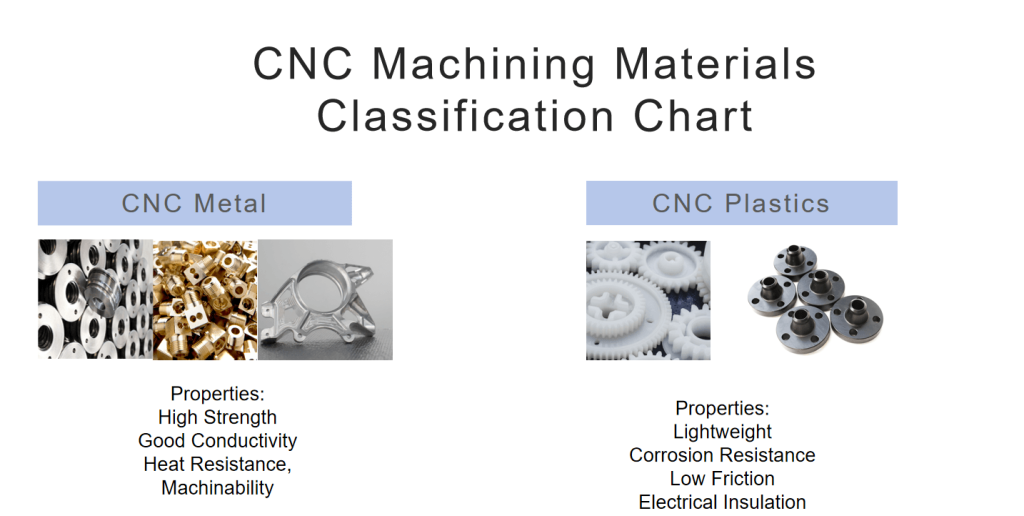
CNC Machining Metal vs Plastic Comparision
| Material Property | Metal | Plastic |
|---|---|---|
| Strength | High | Lower |
| Cost | Higher | Lower |
| Weight | Heavier | Lighter |
| Application | Industrial machinery automation, aerospace | Consumer goods, electronics |
Key Considerations for Choosing CNC Machining Materials
When selecting CNC machining materials, you must evaluate several factors in order to ensure performance and cost efficiency.
- Application Requirements: Match CNC material properties to operating conditions.
- Tolerance Precision: High tolerances often require stable CNC metals.
- Machinability: Some materials need specialized tooling.
- Cost Efficiency: Balance performance with budget.
- Regulatory Compliance: Medical and food applications need certified materials.
Conclusion
In summary, choosing the right CNC machining materials is essential for product success. CNC metals excel in strength, precision, and durability, making them ideal for heavy-duty industrial and aerospace applications. In contrast, CNC plastics offer lightweight versatility, cost efficiency, and corrosion resistance, perfect for medical devices and consumer goods. When evaluating options, remember to balance application requirements, tolerance precision, machinability, budget, and regulatory compliance—whether you’re comparing CNC machining metal vs plastic for a new project or specifying 6061 aluminum CNC for lightweight structural parts.
Ultimately, working with an experienced CNC partner ensures you select the best material for your design, tolerance, and industry standards. At AMSL CNC Machining Parts, our team combines deep material expertise with ASTM/ISO-compliant processes to deliver precision components tailored to your needs. Contact us today to discuss your material specifications and receive a no-obligation quote for your next CNC machining project.